An adventure park is more than a place where visitors come to enjoy ziplining, rope courses, climbing walls, obstacle challenges and other outdoor activities. From a business perspective, it is an experience-based leisure business that can generate revenue from several customer segments and services.
Unlike a business that depends on selling a single product, an adventure park can combine entry tickets, paid activities, food and beverages, group bookings, corporate events, merchandise, memberships and special experiences. This makes the business model more diversified when the park is planned and operated properly.
India’s growing focus on adventure tourism is also creating greater attention toward organised operations and safety. The Ministry of Tourism, in association with the Adventure Tour Operators Association of India, has formulated Model Adventure Safety Guidelines and circulated them to States and Union Territories for adoption or updating of safety protocols.
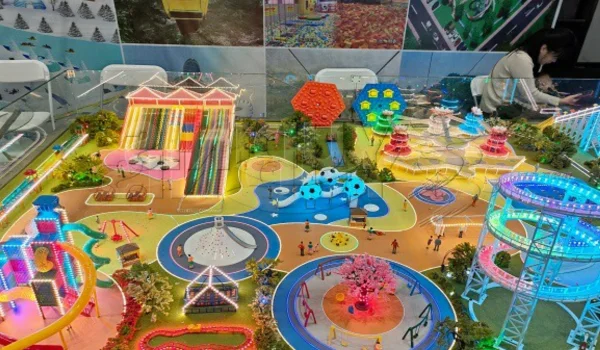
What Is an Adventure Park Business Model?
The adventure park business model explains how a park attracts visitors, delivers experiences and converts those visits into revenue.
At its simplest:
Visitors → Experiences → Spending → Revenue → Operating Costs → Profit
However, a well-developed adventure park does not depend only on its entry ticket. It tries to increase the average revenue per visitor by offering additional activities, food, events and other services.
For example, a visitor may initially purchase an entry ticket but later spend additional money on a premium adventure activity, food, photography or merchandise.
That is where the real strength of the business model lies.
Main Revenue Sources of an Adventure Park
An adventure park can develop several revenue streams instead of depending on one source.
- Entry Tickets
Entry tickets are usually the most visible revenue source.
The park may offer:
- General entry tickets
- Activity-inclusive tickets
- Family packages
- Child tickets
- Weekend pricing
- Holiday pricing
- Premium access packages
However, ticket revenue alone does not necessarily determine whether an adventure park becomes highly profitable.
The bigger opportunity is often what visitors spend after entering the park.
- Adventure Activity Charges
Many parks can charge separately for selected activities.
Examples include:
- Zipline
- Rope course
- Rock climbing
- Wall climbing
- Obstacle courses
- Sky cycling
- Archery
- Paintball
- ATV or similar experiences, where legally and operationally appropriate
- Special challenge zones
A park can therefore create different packages based on the number or type of activities included.
- Food & Beverage Revenue
Visitors may spend several hours inside an adventure park, creating an opportunity for:
- Cafés
- Restaurants
- Snack counters
- Beverage stalls
- Quick-service food
- Family meal packages
Food and beverage can become particularly relevant because visitors often need refreshments after physical activities.
The objective is not simply to sell food but to increase the average spend per visitor.
- Corporate Events
Corporate groups can represent a valuable customer segment.
Companies may use adventure parks for:
- Team-building activities
- Employee outings
- Leadership programmes
- Annual gatherings
- Group entertainment
- Corporate celebrations
Instead of selling individual tickets, the park can create customised group packages.
This changes the business model from individual consumer sales to B2B group sales.
- School & Educational Group Visits
Schools can also become an important group customer.
Adventure-based activities can be combined with:
- Outdoor learning
- Team activities
- Physical challenges
- Leadership exercises
- Group games
For the operator, advance group bookings can make visitor planning easier and potentially improve weekday utilisation.
- Birthday & Private Events
Adventure parks can create packages for:
- Birthday parties
- Family celebrations
- Private gatherings
- Youth groups
- Special occasions
Packages may combine activities, food, reserved areas and event services.
This is particularly useful for generating revenue beyond ordinary walk-in visitors.
- Memberships & Annual Passes
A membership model can help convert occasional visitors into repeat customers.
Possible products include:
- Annual passes
- Family memberships
- Student memberships
- Weekend passes
- Multi-visit packages
For example, instead of depending entirely on new customers every weekend, a park can encourage existing customers to return several times during the year.
This creates a more predictable revenue opportunity.
- Photography & Video
Adventure activities naturally create visually attractive moments.
Parks can offer:
- Professional photographs
- Activity videos
- Group photographs
- Event photography
- Digital memories
These services can be sold separately or included in premium packages.
The important principle is that photography should complement the visitor experience rather than interfere with safety or operations.
- Merchandise
An adventure park can sell branded products such as:
- T-shirts
- Caps
- Water bottles
- Bags
- Souvenirs
- Adventure-themed products
Merchandise can also strengthen the park’s brand beyond the physical property.
- Sponsorships & Brand Partnerships
Once an adventure park develops significant visitor traffic, brands may become interested in partnerships.
Potential opportunities include:
- Sponsored activity zones
- Event sponsorships
- Branded installations
- Product sampling
- Promotional campaigns
- Co-branded events
This can create an additional revenue stream without relying entirely on ticket sales.
The Most Important Metric: Revenue Per Visitor
One of the most useful ways to understand an adventure park’s business model is average revenue per visitor.
A simplified formula is:
Revenue Per Visitor = Total Revenue ÷ Total Visitors
Suppose a hypothetical park receives 50,000 visitors during a period and generates ₹50 lakh in total revenue.
Its average revenue per visitor would be:
₹50,00,000 ÷ 50,000 = ₹100 per visitor
Now imagine the operator increases spending through activities, food, merchandise and other services.
If average revenue per visitor rises, total revenue can increase even without the same percentage increase in visitor numbers.
This is why adventure park operators should think beyond:
“How many people visited?”
and also ask:
“How much did each visitor spend?”
A Multi-Revenue Adventure Park Model
A diversified model could look like this:
| Revenue Stream | Example |
| Entry | General admission |
| Activities | Zipline, rope course, climbing |
| Food & Beverage | Café, snacks, meals |
| Groups | Schools and corporate groups |
| Events | Birthdays and private events |
| Membership | Annual and multi-visit passes |
| Merchandise | Branded products |
| Photography | Photos and videos |
| Partnerships | Sponsorships and brand activations |
The exact revenue mix will vary depending on location, park size, target audience, activity mix and operating model.
Who Are the Main Customers?
A successful adventure park does not necessarily target only thrill-seekers.
Potential customer groups include:
Families: Looking for entertainment and shared experiences.
Young adults: Often interested in challenging and social activities.
Children: Suitable activities can create a dedicated family segment.
Corporate groups: Companies looking for team-building and recreational experiences.
Schools: Organised educational and recreational outings.
Tourists: Visitors looking for activities near tourist destinations.
Event customers: People looking for birthday or private-event venues.
This segmentation allows the park to develop different products for different audiences.
Why Location Matters to the Business Model
An adventure park’s location influences both visitor demand and operating economics.
A park near a major city may depend heavily on:
- Weekend visitors
- Families
- Corporate groups
- School trips
A park near a tourist destination may have a greater opportunity to serve:
- Domestic tourists
- International tourists
- Resort guests
- Destination-based visitors
Therefore, choosing a location is not simply about finding inexpensive land. It is about finding the right relationship between accessibility, customer demand, competition, tourism traffic and operating feasibility.
Safety Is Part of the Business Model
Adventure activities involve inherent risks, so safety cannot be treated as an optional feature.
The Ministry of Tourism has stated that development and promotion of adventure tourism, along with safety and convenience at adventure tourism sites, is primarily the responsibility of State Governments and UT administrations. It has also asked States and UTs to ensure adherence to safety regulations and licensing norms by operators.
Therefore, an adventure park’s business model must account for:
- Proper equipment
- Inspection and maintenance
- Trained staff
- Operating procedures
- Emergency response
- Visitor instructions
- Risk management
- Applicable permissions and licensing
- Insurance considerations
Cutting safety-related costs may appear attractive in the short term but can create much larger operational, financial and reputational risks.
How an Adventure Park Can Increase Revenue
An operator does not always need to increase ticket prices to increase revenue.
Some practical approaches include:
Increase Average Spend
Offer attractive activity, food and merchandise options.
Build Packages
Combine entry, activities and food into value-based packages.
Target Groups
Develop dedicated corporate, school and family packages.
Improve Weekday Utilisation
Use special offers and group programmes to attract customers outside weekends.
Introduce Memberships
Encourage repeat visits through annual or multi-visit products.
Add Seasonal Experiences
Create limited-period activities or events that give customers a reason to return.
Is an Adventure Park a Good Business?
An adventure park can have an attractive business model because it can generate revenue from multiple customer segments and multiple visitor purchases.
However, success is not guaranteed simply because adventure tourism is popular.
The business depends on factors such as:
- Location
- Visitor demand
- Activity selection
- Pricing
- Safety
- Customer experience
- Operating efficiency
- Marketing
- Maintenance
- Seasonality
- Competition
The strongest model is therefore not necessarily the park with the largest number of rides. It is the park that can consistently deliver safe experiences, strong visitor satisfaction and healthy revenue per visitor.
Final Takeaway
The modern adventure park business model is based on much more than selling entry tickets.
A well-planned park can combine tickets, adventure activities, food and beverages, corporate bookings, school visits, events, memberships, merchandise, photography and brand partnerships.
The key business question is not simply:
“How many visitors can the park attract?”
It is:
“How can the park safely create valuable experiences and generate sustainable revenue from each visitor?”
That shift—from visitor volume to visitor value—is what makes an adventure park a potentially diversified leisure and experience business.