School trips can become a valuable business segment for an adventure park because one booking can bring a large group of students, teachers and accompanying staff at the same time.
Unlike normal leisure visitors, school groups usually require a more structured experience. Schools need predictable pricing, controlled activities, supervision, food arrangements, transportation coordination and clear safety procedures.
For an adventure park, this creates an opportunity to develop a dedicated school-trip business rather than simply offering discounted individual tickets.
A successful school programme can generate revenue through:
- Student entry
- Adventure activities
- Food packages
- Educational experiences
- Teacher and coordinator packages
- Transportation partnerships
- Photography
- Merchandise
- Special group programmes
The objective is to create a package that is affordable for schools while remaining commercially sustainable for the park.
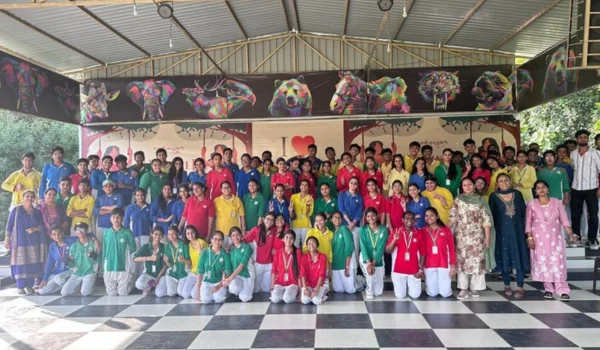
What Is an Adventure Park School Trip Business?
An adventure park school-trip business is a dedicated service designed for schools organising:
- Educational excursions
- Annual school trips
- Student outings
- Activity-based learning visits
- Sports and adventure programmes
- Leadership activities
- Outdoor learning experiences
- School celebrations
The business model is different from individual ticket sales because the park is dealing with a large organised group.
A typical process is:
School → Enquiry → Proposal → Group Booking → Student Arrival → Activities → Food → Departure → Follow-up
Why School Groups Can Be Valuable
Suppose an adventure park receives a booking for:
300 students
Even at an illustrative average package price of:
₹600 per student
the booking value would be:
300 × ₹600 = ₹1,80,000
If food, premium activities or other services are added, the total booking value can increase.
The actual pricing will depend on the park’s location, facilities, season, activity mix and competition.
The bigger advantage is operational efficiency: one institutional customer can deliver hundreds of visitors through a single booking.
What Schools Look For
A school usually does not evaluate an adventure park only on the number of activities available.
Decision-makers may consider:
- Safety
- Price
- Distance
- Travel time
- Student age suitability
- Teacher supervision
- Food and drinking water
- Toilets
- Medical/emergency arrangements
- Activity capacity
- Parking
- Shade/rest areas
- Cleanliness
- Staff behaviour
- Booking flexibility
- Documentation
Therefore, the park’s school package should solve the school’s complete trip-planning problem.
Create Dedicated School Packages
A park should avoid making teachers build their own package from dozens of individual activities.
Instead, create simple options.
Basic School Package
Could include:
- Entry
- Selected activities
- Safety briefing
- Group coordination
Adventure School Package
Could include:
- Entry
- Multiple adventure activities
- Instructor support
- Group challenges
Adventure + Meal Package
Could include:
- Entry
- Activities
- Lunch
- Drinking water
- Basic group coordination
Educational Experience Package
Could include:
- Entry
- Adventure activities
- Nature/environment activity
- Guided learning session
- Meal
The actual inclusions should depend on the park’s infrastructure and target school segment.
School Trip Pricing Strategy
School pricing should be easy to understand.
A simple formula is:
Total School Booking Value = Number of Students × Per-Student Package Price + Additional Services
For example:
250 students × ₹550 = ₹1,37,500
If an additional food package costs:
₹200 × 250 = ₹50,000
Then the illustrative booking value becomes:
₹1,87,500
Teacher pricing can be structured separately or incorporated into the package.
Student Pricing Should Be Predictable
Schools usually work with a fixed per-student budget.
Therefore, pricing such as:
₹549 per student including entry + activities + lunch
can be easier for a school to evaluate than:
- ₹300 entry
- ₹100 activity
- ₹80 meal
- ₹50 service fee
- ₹30 miscellaneous charge
Transparent packages reduce confusion during the sales process.
Offer Different Activity Levels
Not every student group has the same requirements.
An adventure park could create:
| Package | Suitable For | Possible Inclusions |
| Explorer | Younger students | Low-risk activities + guided experiences |
| Adventure | Older students | More activities + challenges |
| Adventure Plus | Senior students | Extended activity package + team challenges |
| Educational | Academic trips | Activities + guided learning |
Age, height, weight, health and activity-specific eligibility requirements should always be communicated clearly.
School Groups Are Not the Same as Corporate Groups
This distinction is important.
Corporate groups may prioritise:
- Team building
- Food
- Premium experiences
- Event spaces
- Networking
School groups generally place greater emphasis on:
- Safety
- Affordability
- Supervision
- Age suitability
- Schedule discipline
- Food and hygiene
- Student management
Therefore, the school product should not simply be a cheaper version of a corporate package.
It should be designed specifically for students.
Safety Should Be the First Operational Priority
Adventure activities inherently involve risk, so school programmes require particularly strong operational controls.
India’s National Adventure Tourism Safety Management Framework highlights equipment standards, standard operating procedures, communication, registration/approval, equipment inspection and certification, training and certification of personnel, risk management, incident recording and emergency-response planning.
In March 2026, the Ministry of Tourism also stated that Model Adventure Safety Guidelines had been circulated to States and Union Territories for adoption or updating, with operators expected to follow applicable safety regulations and licensing norms.
For a school booking, the park should therefore have clearly documented procedures for:
- Activity eligibility
- Equipment checks
- Instructor supervision
- Student grouping
- Emergency response
- First aid
- Incident reporting
- Weather-related activity suspension
- Evacuation
Safety should be an actual operating system—not simply a paragraph in the brochure.
School Responsibility and Park Responsibility
School trips require coordination between the school and the venue.
Government school-education guidance has stated that when schools organise excursions and trips, responsibility for children’s safety and security rests with school authorities, including adequate supervision and appropriate transport arrangements.
This does not mean the adventure park can reduce its own safety responsibilities.
The park should clearly define its responsibilities for:
- Safe activity operation
- Equipment
- Trained instructors
- Venue safety
- Emergency procedures
- Activity-specific supervision
The school should handle its own student-management responsibilities according to applicable rules and its internal policies.
Clear roles reduce confusion.
Teacher and Staff Ratios
A school group might contain:
300 students + 15 teachers
The park should not treat the entire group as one unit.
Students should be divided into smaller activity groups.
For example:
300 students → 10 groups × 30 students
Each group can then follow a structured activity rotation.
The actual group size should be based on the capacity of each activity, instructor availability and safety requirements.
Student Grouping Improves Operations
A large group can be divided using:
- Class
- Section
- Colour-coded wristbands
- Team numbers
- Age group
- Activity eligibility
For example:
Red Team → Activity A
Blue Team → Activity B
Green Team → Activity C
Yellow Team → Meal/Rest
Then the groups rotate.
This reduces crowding and helps the park maintain predictable activity throughput.
Capacity Planning for School Trips
School bookings can create a sudden concentration of visitors.
Suppose:
500 students arrive at 10 AM
but an activity can safely process only:
50 students per hour
That activity cannot absorb the entire group immediately.
The park needs a schedule.
A simplified capacity calculation is:
Activity Throughput = Participants per Session × Sessions per Hour
If an activity handles:
25 students per session
and conducts:
2 sessions per hour
then its theoretical throughput is:
25 × 2 = 50 students per hour
The actual operating capacity may be lower after considering loading, unloading, instructor breaks and operational constraints.
Create a School-Trip Timetable
A well-planned itinerary might look like:
9:30 AM — Arrival
9:45 AM — Group registration
10:00 AM — Safety briefing
10:20 AM — Activity rotation begins
12:30 PM — Lunch
1:15 PM — Second activity rotation
3:00 PM — Group photograph
3:15 PM — Departure preparation
3:30 PM — Departure
The schedule should be flexible enough to handle delays but structured enough to prevent chaos.
Food Is a Major Part of School Trips
Food requirements can be different from those of corporate groups.
Schools may prefer:
- Simple meals
- Vegetarian options
- Drinking water
- Hygienic preparation
- Controlled serving times
- Child-friendly menus
A park can offer:
Entry + Activities + Lunch
as a single school package.
Food should be planned around the arrival and activity schedule to prevent large queues.
Water, Toilets and Rest Areas
These facilities become particularly important when hundreds of students visit together.
The park should assess:
- Drinking-water availability
- Toilet capacity
- Cleaning frequency
- Handwashing facilities
- Shaded areas
- Seating
- Rest areas
- Waste management
The objective is to ensure that the infrastructure can handle the temporary concentration of students.
Transportation Coordination
Many school groups arrive by buses.
The park should therefore have a bus-management plan covering:
- Bus parking
- Arrival sequence
- Student unloading
- Safe pedestrian routes
- Driver waiting areas
- Departure coordination
The Ministry of Education’s excursion guidance also emphasises transport roadworthiness and appropriate driver verification as part of school-trip safety arrangements.
The park can coordinate with schools without taking over responsibilities that belong to the school or transport provider.
School Booking Process
A professional booking process could be:
Step 1: Enquiry
School provides:
- Date
- Number of students
- Classes/age groups
- Number of teachers
- Required activities
- Meal requirements
Step 2: Proposal
Park provides:
- Package
- Price
- Inclusions
- Timings
- Terms
- Safety information
Step 3: Confirmation
School confirms:
- Date
- Expected group size
- Package
- Payment terms
Step 4: Pre-Visit Planning
Park and school finalise:
- Student count
- Activity groups
- Arrival time
- Meal timing
- Teacher coordination
- Emergency contacts
Step 5: Event Day
Park executes the planned programme.
Step 6: Follow-Up
Park collects feedback and develops the relationship for future trips.
Advance Booking and Deposits
School trips often require advance planning.
The park can use:
- Booking deposit
- Minimum guaranteed student count
- Final headcount deadline
- Cancellation policy
- Rescheduling terms
For example, a booking might require the school to provide the final student count several days before arrival.
The exact terms should be clearly written in the booking agreement.
How to Market School Trips
A school-trip business requires direct institutional marketing.
School Outreach
Contact:
- Principals
- Activity coordinators
- Administrators
- School management
- Trip coordinators
Dedicated School Brochure
Create a PDF or digital brochure containing:
- Activities
- Age suitability
- Package prices
- Food
- Facilities
- Safety procedures
- Group capacity
- Contact details
School Visits
A sales representative can visit schools and explain the programme.
Educational Partnerships
The park can develop relationships with:
- Educational organisations
- School-trip organisers
- Travel agencies
- Activity coordinators
Website Landing Page
Create a dedicated page:
“School Trips & Educational Visits”
rather than forcing schools to search through consumer ticket pages.
Offer Educational Value
An adventure park can make the trip more attractive by connecting activities to learning.
Potential themes include:
- Teamwork
- Leadership
- Environmental awareness
- Problem solving
- Physical activity
- Nature education
- Basic risk awareness
This can make the experience more meaningful than a simple recreational outing.
The Ministry of Education has recognised excursions and study tours as part of student exposure and learning activities in its school programmes.
School Trip Revenue Example
Consider a hypothetical booking:
400 students
₹500 per student package
Student revenue:
400 × ₹500 = ₹2,00,000
Suppose an additional food package is:
₹180 × 400 = ₹72,000
Additional photography and other services:
₹15,000
Illustrative total:
₹2,87,000
This is revenue, not profit.
The park must deduct relevant variable costs such as:
- Food
- Staff
- Instructors
- Activity consumables
- Cleaning
- Event management
- Additional operational costs
Measure School Business Performance
Useful metrics include:
School Enquiries
Number of schools requesting proposals.
Conversion Rate
Confirmed Bookings ÷ Qualified Enquiries × 100
Average Booking Value
Total School Revenue ÷ Number of School Events
Revenue Per Student
Total School Revenue ÷ Number of Students
Repeat School Rate
Percentage of schools that book again.
Cancellation Rate
Percentage of confirmed bookings cancelled.
Capacity Utilisation
Percentage of available capacity used by school groups.
Contribution Margin
Revenue remaining after relevant variable costs.
Repeat Schools Are Highly Valuable
A school that books every year can become a valuable recurring customer.
For example:
Year 1 → 300 students
Year 2 → 350 students
Year 3 → 400 students
The park does not have to acquire an entirely new customer every year.
It can improve the relationship by:
- Offering new activities
- Improving the itinerary
- Providing teacher benefits
- Introducing educational programmes
- Maintaining consistent safety standards
- Offering early booking
The goal is to convert:
One School Trip → Annual School Relationship
Teacher and Coordinator Experience Matters
Teachers influence whether schools return.
A programme that is enjoyable for students but exhausting for teachers may not generate repeat business.
The park should therefore provide:
- Clear schedules
- Dedicated coordinators
- Easy group identification
- Rest areas
- Clear communication
- Quick problem resolution
- Reliable meal timing
A smooth experience for teachers can be an important part of customer retention.
Common Mistakes in School Trip Business
- Selling Only Discounted Tickets
A school programme should be a complete service, not simply a cheaper ticket.
- Accepting More Students Than Capacity Allows
Overbooking can create queues and safety problems.
- Ignoring Age Restrictions
Activities should be assigned according to applicable eligibility requirements.
- Poor Meal Planning
Hundreds of students arriving at one food counter can create significant delays.
- No Group Rotation
Large groups need structured activity schedules.
- Weak Communication Before Arrival
The school should know exactly what to expect.
- No Emergency Plan
The park must have appropriate emergency-response procedures before accepting large student groups.
- Ignoring Repeat Business
Every successful school trip should be treated as a potential long-term relationship.
A Practical School-Trip Business Model
A strong school programme can follow this structure:
Affordable Group Package
↓
Safe & Age-Appropriate Activities
↓
Structured Student Rotation
↓
Food + Facilities
↓
Smooth Teacher Coordination
↓
Positive School Experience
↓
Repeat Booking
This creates a sustainable B2B customer-acquisition cycle.
Final Takeaway
School trips can become a significant revenue channel for an adventure park when the park treats them as a specialised business rather than simply offering group discounts.
The strongest model combines:
Group Booking + Student Pricing + Adventure Activities + Food + Safety + Supervision + Structured Operations
The commercial opportunity comes from large group volumes, but long-term success depends on much more than visitor numbers.
A school is more likely to return when the entire experience is:
- Safe
- Affordable
- Well organised
- Age appropriate
- Easy to book
- Educational or experiential
- Comfortable for teachers
- Reliable from year to year
The ultimate goal should be:
First School Trip → Successful Experience → Repeat Annual Booking → Long-Term School Account
For an adventure park, that can turn seasonal school excursions into a repeatable and scalable business channel.