For an adventure park, corporate customers can represent a valuable business segment because a single company booking may bring dozens or even hundreds of visitors at once.
Companies increasingly organise offsites, team-building programmes, employee engagement activities, annual outings, leadership programmes and informal corporate events. An adventure park can convert this demand into a dedicated B2B revenue stream by creating packages specifically for organisations.
Unlike normal individual ticket sales, corporate events allow an adventure park to sell a combination of:
- Entry
- Adventure activities
- Food
- Meeting spaces
- Team-building programmes
- Event management
- Photography and video
- Transportation
- Custom experiences
The result is a potentially higher-value booking with fewer individual transactions.
What Is an Adventure Park Corporate Events Business?
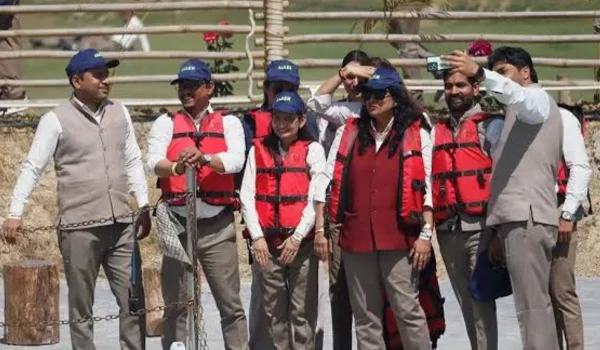
An adventure park corporate-events business means selling park experiences directly to companies, HR departments, event agencies, corporate travel companies and other organisations.
Instead of marketing only to individual visitors, the park develops a separate B2B sales channel.
A typical corporate booking could look like:
Company → Corporate package → Group visit → Activities → Food → Team building → Additional services
For the park, the customer is not just an individual visitor. The customer is the organisation arranging the event.
Why Companies Choose Adventure Parks
An adventure park can provide something different from a conventional conference room or restaurant.
Corporate groups may use an adventure park for:
- Team building
- Employee engagement
- Annual outings
- Leadership activities
- Stress-relief programmes
- New-employee integration
- Department outings
- Sales-team events
- Reward programmes
- Informal meetings
- Corporate celebrations
Adventure activities can also create opportunities for structured group challenges rather than simply providing entertainment.
Main Corporate Revenue Sources
A park can earn from corporate clients through multiple components.
- Group Entry Fees
The simplest revenue source is group admission.
For example:
150 employees × ₹600
would produce:
₹90,000
in entry revenue.
The actual price should depend on the park’s normal ticket price, package inclusions, demand and negotiated corporate terms.
- Adventure Activity Packages
The park can bundle selected activities into a corporate package.
For example:
Corporate Adventure Package
Could include:
- Park entry
- Selected adventure activities
- Safety briefing
- Instructor support
- Group challenge
This gives the company a clearer total price than asking employees to purchase individual activities separately.
- Food and Catering
Food can become one of the most important additions to a corporate booking.
Possible formats include:
- Breakfast
- Lunch
- Snacks
- Tea/coffee
- Buffet
- Packed meals
- Evening refreshments
For a group of 150 people, even a modest food package can create substantial additional revenue.
For example:
150 people × ₹400 food package = ₹60,000
This is only an illustrative calculation.
- Team-Building Programmes
This is where an adventure park can move beyond normal ticket sales.
Instead of simply allowing employees to use rides and activities, the park can create structured programmes involving:
- Team challenges
- Problem-solving games
- Leadership exercises
- Obstacle challenges
- Communication activities
- Time-based competitions
- Group coordination tasks
The company can pay a separate programme fee or purchase it as part of a premium package.
- Meeting and Event Spaces
If the park has suitable infrastructure, it can rent:
- Conference rooms
- Open-air spaces
- Lawns
- Covered event areas
- Training rooms
- Private dining areas
A company could therefore combine a business session with adventure activities.
For example:
Morning: Corporate presentation
Afternoon: Team-building activities
Evening: Food and networking
This can increase the total value of the booking.
- Photography and Video
Corporate events often create demand for professional documentation.
The park could offer:
- Group photography
- Event photography
- Short videos
- Team photographs
- Branded event videos
This can be sold as an optional add-on.
- Transportation
Depending on the park’s location, transportation can be included through partnerships or an in-house arrangement.
Possible services include:
- Office-to-park transport
- Bus arrangements
- Return transportation
The park can earn a management margin or package fee, subject to the applicable transport and commercial requirements.
- Corporate Merchandise
Companies may want:
- T-shirts
- Caps
- Team badges
- Event souvenirs
- Certificates
- Branded merchandise
These products can be included in premium packages or sold separately.
Build Corporate Packages Instead of Selling Everything Separately
Companies generally prefer predictable budgets.
Instead of presenting twenty different products, an adventure park can create three or four simple packages.
For example:
| Package | Possible Inclusions |
| Basic | Entry + selected activities |
| Team | Entry + activities + team-building |
| Premium | Entry + activities + food + team programme |
| Executive | Premium package + private space + customised experience |
The actual prices should be determined according to the park’s costs, capacity, customer segment and local market.
Corporate Pricing Strategy
Corporate pricing should not simply mean giving the biggest possible discount.
The park should calculate:
Corporate Revenue Per Person = Total Package Revenue ÷ Number of Participants
Suppose a company pays:
₹1,80,000 for 150 people
Then:
₹1,80,000 ÷ 150 = ₹1,200 per person
If the package includes entry, activities, food and team-building, the park can then analyse the contribution from each component.
Minimum Group Size
A corporate programme can have a minimum booking size.
For example:
Minimum booking: 30 people
This helps the park avoid spending significant staff and operational resources on very small corporate groups.
However, the minimum should reflect the actual economics of the park rather than being chosen arbitrarily.
Corporate Event Revenue Example
Consider a hypothetical one-day corporate event for 200 employees.
| Revenue Component | Illustrative Amount |
| Entry & activities | ₹1,40,000 |
| Food | ₹80,000 |
| Team-building programme | ₹40,000 |
| Event space | ₹25,000 |
| Photography | ₹15,000 |
| Merchandise | ₹20,000 |
| Total | ₹3,20,000 |
This is an illustrative business model, not a market quotation.
The important lesson is that the park can increase the value of one corporate booking by combining several services.
Corporate Events Can Improve Weekday Revenue
One major advantage of corporate business is the potential to use capacity during periods when regular leisure traffic is lower.
For example, an adventure park might have:
High demand: Saturday and Sunday
Lower demand: Monday–Friday
Corporate events can potentially fill selected weekday capacity.
This can improve utilisation of:
- Staff
- Event spaces
- Adventure activities
- Food facilities
- Parking
- Other infrastructure
However, capacity and safety should always determine the maximum group size.
Corporate Sales Is Different from Consumer Marketing
Selling individual tickets is largely a B2C activity.
Corporate events are primarily B2B.
The decision-making process may involve:
- HR department
- Administration
- Procurement
- Event agency
- Senior management
- Finance department
- Employee engagement team
Therefore, the park needs a proper corporate sales process.
Create a Corporate Sales Team
Even a medium-sized park can designate employees for corporate sales.
Their responsibilities may include:
- Finding companies
- Contacting HR teams
- Sending proposals
- Conducting site visits
- Negotiating packages
- Managing bookings
- Coordinating event execution
- Collecting feedback
- Following up for repeat events
The goal is to convert one event into an ongoing corporate relationship.
Corporate Lead Generation
Potential channels include:
Direct Corporate Outreach
Approach companies located within the park’s catchment area.
HR Networks
Build relationships with HR and employee-engagement professionals.
Event Agencies
Partner with corporate event planners.
Travel Management Companies
Corporate travel companies can potentially bring group bookings.
Use professional networks to reach:
- HR managers
- Administration heads
- Event managers
- Corporate travel managers
Corporate Website Page
The park should have a dedicated:
“Corporate Events”
page with:
- Packages
- Activities
- Group capacity
- Food options
- Event spaces
- Safety information
- Enquiry form
- Contact details
Event Agencies Can Become Important Partners
A park does not have to find every corporate customer directly.
Event management companies already have relationships with businesses.
The park can develop partnerships with agencies that organise:
- Annual corporate outings
- Team-building events
- Conferences
- Employee engagement programmes
- Dealer meets
- Leadership retreats
The commercial arrangement should be clearly documented, including pricing, commissions, cancellation terms and responsibilities.
Customisation Can Increase Revenue
Large companies may not want a standard package.
They may ask for:
- Company branding
- Custom team challenges
- Private spaces
- Special food menus
- Dedicated coordinators
- Awards
- Certificates
- Photography
- Themed events
Customisation can justify premium pricing.
However, custom requests should be evaluated against additional staffing and operational costs.
Safety Is a Corporate Sales Requirement
For adventure parks, safety is not just an operational issue—it can influence whether a company chooses the venue.
Corporate decision-makers may ask about:
- Activity safety procedures
- Instructor qualifications
- Equipment inspection
- Emergency response
- Medical support
- Insurance
- Participant restrictions
- Emergency access
India’s National Adventure Tourism Safety Management Framework identifies risk mitigation, equipment standards, standard operating procedures, personnel training/certification, inspection, auditing, incident recording and emergency response as important elements of adventure safety management.
In March 2026, the Ministry of Tourism also stated that Model Adventure Safety Guidelines had been circulated to States and Union Territories for adoption/updating, with States/UTs asked to ensure adherence to safety regulations and licensing norms.
Therefore, a corporate proposal should present safety information clearly rather than treating it as an afterthought.
Corporate Event Capacity Planning
Corporate bookings should be matched with the park’s operational capacity.
Suppose a park accepts:
300 corporate visitors
but its most popular activity can process only:
40 participants per hour
A poorly designed programme could create long queues.
The solution is to create a structured rotation.
For example:
Team A → Zipline
Team B → Obstacle Course
Team C → Team Challenge
Team D → Food/Rest
Then rotate the groups.
This can improve visitor flow and reduce congestion.
Dedicated Corporate Check-In
Corporate groups should ideally have a separate or streamlined arrival process.
Possible systems include:
- Pre-generated guest lists
- Group wristbands
- Dedicated check-in counter
- Digital confirmation
- Pre-assigned teams
- Printed schedules
- Dedicated event coordinator
A smooth arrival can significantly improve the corporate experience.
Build a Corporate Event Schedule
A typical full-day programme could look like:
9:00 AM — Arrival
9:30 AM — Welcome & safety briefing
10:00 AM — Adventure activities
12:30 PM — Team-building session
1:30 PM — Lunch
2:30 PM — Group challenges
4:00 PM — Break
4:30 PM — Final activity
5:30 PM — Awards & photographs
The exact schedule should be adapted to the park’s activities, capacity and operating hours.
Repeat Corporate Bookings Are Extremely Valuable
The strongest corporate-event model is not:
One company → one event
It is:
One company → recurring relationship
A company may organise:
- Annual outing
- Quarterly team activity
- New-employee programme
- Leadership event
- Sales-team reward programme
Therefore, after every successful event, the park should collect feedback and maintain a professional B2B relationship.
Corporate Customer Lifetime Value
A company that books once for 200 employees may become more valuable than an individual customer.
Suppose a company spends:
₹3 lakh per event
and books:
3 events per year
Annual revenue becomes:
₹9 lakh
If that relationship continues for five years:
₹9 lakh × 5 = ₹45 lakh
This is a simplified illustration and does not represent profit.
The calculation demonstrates why corporate account management can be strategically important.
Measure Corporate Event Performance
An adventure park should track:
- Number of corporate enquiries
- Proposal-to-booking conversion
- Average booking value
- Participants per event
- Revenue per corporate visitor
- Food revenue
- Activity revenue
- Add-on revenue
- Event profitability
- Repeat booking rate
- Cancellation rate
- Customer satisfaction
One particularly useful metric is:
Average Corporate Booking Value = Total Corporate Revenue ÷ Number of Corporate Events
For example:
₹30 lakh annual corporate revenue ÷ 20 events = ₹1.5 lakh average booking value
Again, this is only an illustration.
Profit Is More Important Than Revenue
A ₹5 lakh corporate booking is not automatically a ₹5 lakh profit opportunity.
The park may incur:
- Food costs
- Staff costs
- Instructor costs
- Event management costs
- Equipment costs
- Cleaning costs
- Transportation costs
- Agency commissions
- Overtime
- Customisation expenses
Therefore, corporate packages should be evaluated using contribution margin and event-level profitability.
A simplified formula is:
Corporate Event Contribution = Event Revenue − Variable Event Costs
This provides a better commercial picture than revenue alone.
Common Mistakes in Corporate Adventure Park Business
- Excessive Discounting
Corporate clients negotiate, but an unnecessarily low price can destroy margins.
- No Dedicated Packages
A standard consumer ticket is not always an effective corporate product.
- Ignoring Procurement Requirements
Large companies may require formal quotations, invoices, tax documentation and vendor onboarding.
- Poor Event Coordination
A good adventure experience can be damaged by delays at registration, food service or activity queues.
- Overpromising Capacity
The park should never sell more participants than it can safely and comfortably handle.
- Treating Safety as Marketing Copy
Safety procedures need to be operationally real, documented and communicated.
- No Post-Event Follow-Up
A successful event should lead to another conversation—not simply an invoice.
How an Adventure Park Can Build a Strong Corporate Business
A practical strategy is:
Step 1: Identify companies within the catchment area.
Step 2: Create 3–4 corporate packages.
Step 3: Prepare a professional corporate proposal.
Step 4: Clearly document activities, capacity and safety procedures.
Step 5: Build relationships with HR teams and event agencies.
Step 6: Offer site visits for corporate decision-makers.
Step 7: Execute the first event smoothly.
Step 8: Collect feedback.
Step 9: Follow up for repeat bookings.
Step 10: Develop long-term corporate accounts.
Final Takeaway
Corporate events can turn an adventure park from a purely consumer-facing attraction into a B2B experience business.
The strongest corporate model combines:
Entry + Adventure Activities + Team Building + Food + Event Space + Add-ons
But the real opportunity is larger than one booking.
A well-run corporate programme can create:
- Higher group booking values
- Better weekday utilisation
- Additional food and activity revenue
- Repeat corporate accounts
- Event-agency partnerships
- Long-term B2B relationships
The most valuable corporate customer is therefore not necessarily the company that negotiates the cheapest package.
It is the company that returns regularly, books larger groups, purchases multiple services and becomes a long-term account.
For an adventure park, that can transform corporate events from occasional group bookings into a predictable and scalable revenue channel.