An adventure park usually faces a simple business challenge: how do you get visitors to come back?
A first-time visitor buys a ticket, enjoys the activities and eventually leaves. If the relationship ends there, the park has to find another customer for the next visit.
A membership or annual-pass programme changes this model.
Instead of treating every visit as a completely separate transaction, the park can create an ongoing relationship with customers through annual passes, multi-visit packages, family memberships and exclusive member benefits.
For an adventure park, this can create another commercial advantage: repeat visitors already know the park, understand its activities and may spend on food, premium experiences, events and other services during subsequent visits.
What Is an Adventure Park Membership Business?
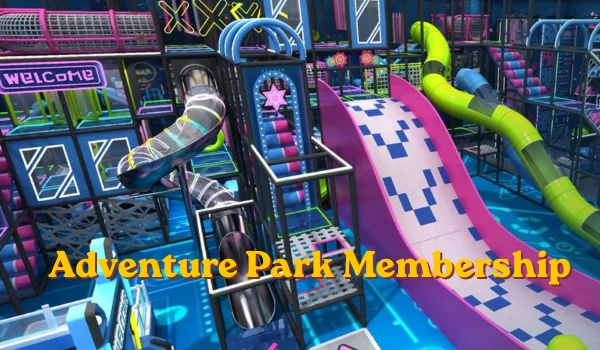
An adventure park membership business allows customers to pay upfront or periodically in exchange for benefits such as:
- Multiple visits
- Unlimited entry during the membership period
- Discounted activities
- Food and beverage discounts
- Merchandise discounts
- Priority access
- Guest benefits
- Special events
- Member-only experiences
The exact structure can vary.
An annual pass is primarily about access, while a broader membership programme can combine access with additional benefits and customer engagement.
The basic business cycle becomes:
First Visit → Membership Offer → Membership Purchase → Repeat Visits → Additional Spending → Renewal
That is fundamentally different from relying only on one-time ticket sales.
Why Repeat Visitors Matter
Suppose an adventure park has two customers.
Customer A
Visits once and spends ₹800.
Customer B
Purchases a membership and visits five times during the year.
Even if Customer B pays a discounted effective entry price, the park may have five opportunities to generate additional revenue through:
- Food
- Premium activities
- Events
- Merchandise
- Guest tickets
- Photography
- Special experiences
This is why the value of a member should not be judged only by the membership fee.
The more useful question is:
“How much total revenue does a member generate during the membership relationship?”
Annual Pass vs Regular Ticket
Consider a simplified example.
A single visit costs:
₹700
An annual pass costs:
₹2,000
A customer who expects to visit only once is unlikely to buy the annual pass.
But someone expecting three or four visits may consider it attractive.
For the park, the annual pass creates an upfront payment and a reason for the customer to return.
The exact pricing should depend on the park’s actual ticket price, marginal cost per visit, customer behaviour and expected repeat frequency.
Different Types of Adventure Park Memberships
A single membership product does not have to serve everyone.
- Individual Annual Pass
Designed for frequent individual visitors.
Benefits may include:
- Annual entry
- Member discounts
- Priority booking
- Selected activity benefits
- Family Membership
Designed for families who expect multiple visits.
Possible benefits:
- Family entry
- Food discounts
- Guest discounts
- Birthday benefits
- Member-only events
- Kids Membership
A park with a strong children’s segment could create a child-focused membership with age-appropriate benefits.
- Multi-Visit Pass
Instead of unlimited access, customers receive a fixed number of visits.
For example:
- 3 visits
- 5 visits
- 10 visits
This can be useful for customers who want savings but may not visit frequently enough for an annual unlimited pass.
- Premium Membership
A premium tier could include additional benefits such as:
- Priority access
- Premium activities
- Special events
- Guest privileges
- Higher discounts
The important point is that each tier should provide genuine additional value.
How Should an Adventure Park Price an Annual Pass?
There is no universal formula.
A useful starting point is to understand the customer’s likely number of visits.
Suppose:
Single-entry ticket = ₹700
If the expected frequent visitor comes four times per year:
4 × ₹700 = ₹2,800
An annual pass priced around ₹2,000–₹2,300 might appear attractive to that customer.
But the park must also calculate:
- Expected number of visits
- Revenue lost from discounted admission
- Additional spending by members
- Marginal cost of additional visits
- Peak-day capacity
- Member benefits
- Renewal probability
Therefore, the objective is not:
“Make the annual pass as cheap as possible.”
It is:
“Make the pass attractive enough to encourage purchase while preserving sustainable economics.”
The Break-Even Visit Concept
One useful way to explain membership value is through the break-even number of visits.
Suppose:
Annual pass = ₹2,100
Regular ticket = ₹700
Then:
₹2,100 ÷ ₹700 = 3 visits
The customer effectively reaches the ticket-price break-even point at three visits.
However, the park should not assume that this means the membership becomes profitable after exactly three visits.
The operator also needs to consider the incremental cost associated with each additional visit.
This is particularly important for unlimited memberships.
Unlimited vs Limited Visits
There are two broad approaches.
Unlimited Annual Pass
Customers can visit as often as permitted during the validity period.
Advantages:
- Strong customer attraction
- Encourages frequent visits
- Simple value proposition
- Potentially strong loyalty
Risks:
- Heavy users can consume significant capacity
- Peak-day crowding can increase
- Revenue per visit may decline
- Capacity planning becomes more important
Limited-Visit Pass
Customers receive a defined number of visits.
For example:
5 Visits for ₹2,499
This provides a clearer ceiling on usage and can make financial planning easier.
A park can also combine both models.
Why Capacity Matters to Memberships
Memberships are closely connected to the capacity-planning strategy discussed earlier.
Imagine a park can comfortably accommodate:
800 visitors on a peak day
and suddenly thousands of annual-pass holders decide to visit on the same holiday.
The park could face:
- Crowding
- Long queues
- Activity bottlenecks
- Poor visitor experience
- Operational pressure
Therefore, a membership programme should be designed around actual capacity.
Possible solutions include:
- Advance booking
- Peak-day reservations
- Blackout dates where legally and commercially appropriate
- Member time slots
- Special-event restrictions
- Capacity-based booking
- Different membership tiers
The terms must be communicated clearly before purchase.
A Real-World Example of Annual-Pass Structure
EOD Parks currently offers multiple pass formats, including an annual unlimited-entry option, a six-visit “Super Saver” pass and an annual “Ultimate” pass with activity benefits. It also uses benefits such as food-and-beverage discounts and priority access.
This illustrates an important principle:
Membership does not have to mean only unlimited entry.
A park can create different products for different customer behaviours.
Membership Revenue Is More Than the Membership Fee
Suppose a hypothetical park sells:
2,000 memberships × ₹2,000
That produces:
₹40 lakh in upfront membership revenue
But the commercial value does not necessarily end there.
Members may additionally purchase:
- Food
- Beverages
- Premium activities
- Merchandise
- Birthday packages
- Guest tickets
- Event tickets
Therefore, the membership programme should be evaluated on total member lifetime value, not only membership sales.
What Is Member Lifetime Value?
Member Lifetime Value, or LTV, estimates the total revenue a customer may generate over the relationship with the park.
A simplified concept is:
Member LTV = Membership Revenue + Additional Spending − Relevant Variable Costs
For example, a hypothetical member might generate:
- Membership: ₹2,000
- Food: ₹1,200
- Activities: ₹1,000
- Merchandise: ₹500
- Guest tickets: ₹600
Total revenue:
₹5,300
This is only an illustration.
The actual LTV will vary significantly by customer type, visit frequency, pricing and spending behaviour.
Membership Can Increase Visit Frequency
Once customers have already paid for access, visiting again may feel less expensive.
For example:
Without membership:
“Should I spend ₹700 on another visit?”
With membership:
“I already have access, so let’s go this weekend.”
This psychological shift can encourage repeat visitation.
But the park must ensure that the increased visits produce a positive overall economic outcome.
Create Reasons to Return
A membership programme alone cannot guarantee repeat visits.
The park should continually give members reasons to come back.
Examples include:
New Activities
Introduce new challenges or attractions periodically.
Seasonal Experiences
Create special experiences during holidays or seasons.
Member Events
Organise member-only or member-priority events.
Family Days
Create special activities for families.
Competitions
Use suitable adventure challenges, games or contests.
Member Rewards
Offer benefits after reaching visit or spending milestones.
The objective is to turn:
“I bought a pass.”
into:
“I have a reason to visit again.”
Use Member-Only Benefits Carefully
Benefits can make a membership feel more valuable without significantly reducing ticket revenue.
Possible benefits include:
- Priority booking
- Discounted guest tickets
- Food discounts
- Merchandise discounts
- Birthday benefits
- Early access to new activities
- Special event access
- Member-only offers
However, discounts should be designed carefully.
If every product is heavily discounted, the park may simply reduce revenue instead of creating loyalty.
Guest Benefits Can Help Acquire New Customers
A useful membership feature can be:
“Bring a friend” benefits.
For example, members could receive a limited number of discounted guest tickets.
This has two advantages.
The member receives additional value.
The guest gets an opportunity to experience the park.
If the guest enjoys the experience, that person can potentially become a future regular visitor or member.
This turns existing customers into a potential referral channel.
Memberships Can Help During Slow Periods
An adventure park may experience different demand levels across the year.
Membership campaigns can be structured to stimulate visits during quieter periods.
For example:
Weekday Member Benefits
or
Off-Peak Member Experiences
This can encourage members to visit when the park has spare capacity.
However, promotions should not create excessive demand during periods when the park is already operating near its safe capacity.
Memberships and Food Revenue
A member who visits several times has multiple opportunities to purchase food and beverages.
The park can therefore offer:
- Member café discounts
- Family meal deals
- Member combo offers
- Birthday food packages
- Prepaid food vouchers
But discounts should be evaluated against food margins.
A 20% discount does not automatically create more profit.
The objective is to increase incremental spending, not simply reduce prices.
Memberships and Events
Members can also become a natural audience for events.
Potential events include:
- Adventure competitions
- Family days
- Seasonal festivals
- Kids activities
- Night experiences
- Corporate-member events
- Special activity launches
Some events can be included in membership while others can provide members with discounted access.
This creates another reason to maintain the membership relationship.
How to Sell More Memberships
The best time to offer membership is often when customers already understand the value of the park.
Potential sales points include:
During Online Booking
“Upgrade today’s ticket to an annual pass.”
At the Entrance
Present the membership alongside ticket options.
During the Visit
Show membership benefits through appropriate signage or digital communication.
At Exit
Customers who enjoyed the experience may be receptive to a repeat-visit offer.
After the Visit
Use permitted customer communication to offer renewal or membership options.
The sales message should focus on value and future experiences, not simply discounts.
Track Membership Conversion
A park should measure:
Membership Conversion Rate = New Members ÷ Eligible Visitors × 100
Suppose:
20,000 eligible visitors
and:
800 become members
Then:
800 ÷ 20,000 × 100 = 4%
This is a hypothetical example.
The park can track this number by customer segment and sales channel to understand what works.
Important Membership Metrics
A good membership dashboard can include:
Membership Sales
Number of new memberships sold.
Membership Revenue
Total money received from memberships.
Visit Frequency
Average visits per member.
Member Spending
Average additional spending per visit.
Renewal Rate
Percentage of members who renew.
Churn Rate
Percentage who do not renew.
Member LTV
Estimated total revenue generated per member.
Capacity Usage
How much park capacity is being consumed by members.
These metrics together provide a much clearer picture than membership sales alone.
Renewal Is More Important Than Just New Membership Sales
A park can sell many memberships during its launch but still have a weak membership business if customers do not renew.
Therefore, the real long-term cycle is:
Acquire → Engage → Visit → Spend → Renew
To improve renewal, the park needs to deliver:
- Consistent experience
- Safe operations
- Good customer service
- New reasons to visit
- Meaningful benefits
- Transparent terms
Safety is particularly important for adventure businesses. India’s National Adventure Tourism Strategy identifies risk mitigation, guidance for service providers, skill development and building tourist confidence among the objectives of its safety framework.
Common Membership Mistakes
Mistake 1: Making the Pass Too Cheap
An extremely cheap unlimited pass may encourage heavy usage without generating enough economic value.
Mistake 2: Ignoring Peak Capacity
Large numbers of members can create crowding during holidays.
Mistake 3: Offering Too Many Discounts
Excessive discounts can reduce the value of the membership economics.
Mistake 4: No Reason to Renew
If the park remains exactly the same, customers may not see a reason to purchase another year.
Mistake 5: Complicated Terms
Customers should clearly understand:
- Validity
- Blackout dates, if any
- Included activities
- Guest benefits
- Booking requirements
- Transferability
- Refund/cancellation rules
Mistake 6: Treating Members Only as Discount Customers
Members should be viewed as long-term customers, not simply people who receive cheaper tickets.
A Simple Membership Model
A hypothetical adventure park could create three tiers:
| Plan | Example Price | Possible Benefits |
| Basic | ₹1,999/year | Multiple visits + selected discounts |
| Family | ₹5,999/year | Family access + food/guest benefits |
| Premium | ₹7,999/year | Wider access + priority + premium benefits |
These prices are illustrative only and should not be treated as market recommendations.
The actual structure should depend on:
- Regular ticket price
- Expected visit frequency
- Park capacity
- Customer segments
- Activity costs
- Additional spending
- Seasonality
Is an Adventure Park Membership Business Profitable?
It can be, but profitability depends on the structure.
A successful membership programme should ideally achieve three things:
- Generate upfront or recurring revenue
- Increase repeat visitation
- Generate additional spending without overwhelming capacity
If members visit frequently but spend very little, consume peak capacity and do not renew, the programme may become difficult to sustain.
If members visit regularly, purchase additional services, bring guests and renew their passes, the programme can become a valuable customer-retention engine.
Final Takeaway
An adventure park membership is more than an annual discount card.
It can become a customer-retention and recurring-revenue system that changes the relationship between the park and its visitors.
The strongest membership model connects:
Membership Fee + Repeat Visits + Additional Spending + Customer Loyalty + Renewal
A well-designed programme can use:
- Annual passes
- Multi-visit passes
- Family memberships
- Premium tiers
- Guest benefits
- Priority access
- Member events
- Food and merchandise benefits
But the goal should never be simply to sell as many memberships as possible.
The real objective is to create a sustainable cycle:
Happy Visitor → Member → Repeat Visitor → Higher Lifetime Value → Renewal → Long-Term Customer
For an adventure park, that can be much more valuable than relying entirely on one-time visitors.